How to Make an Anvil in Minecraft With Iron Blocks and Ingots
To make an anvil in Minecraft, craft three iron blocks and combine them with four iron ingots in a crafting table, placing the blocks across the top row and the ingots down the center column. Here is how to make an anvil in minecraft, step by step, from mining the iron to your first repair.
An anvil costs a lot of iron, but it earns its keep. It repairs tools, combines enchantments, renames items, and applies enchanted books, all things a regular crafting table cannot do. Once you have one, your best gear lasts far longer.
Gather the Iron You Need
A single anvil needs thirty-one iron ingots in total: twenty-seven for the three iron blocks and four more for the top corners and neck. That is a serious amount, so plan a mining trip.
Iron ore is common in caves and underground layers. Mine it with a stone pickaxe or better, then smelt the raw iron in a furnace to get ingots.
- Mine iron ore deep underground or in cave systems.
- Smelt raw iron in a furnace using coal, charcoal, or any fuel.
- Craft iron blocks by filling a three-by-three grid with nine ingots each.
Tip: Bring extra torches and food on the mining run. You need at least thirty-one ingots, and it is far less annoying to gather a little surplus than to make a second trip halfway through crafting.
Craft the Anvil
With three iron blocks and four spare ingots ready, open a crafting table. The anvil uses a distinctive T-shape.
- Open the crafting table for the full three-by-three grid.
- Place three iron blocks across the entire top row.
- Place one iron ingot in the center of the middle row.
- Place three iron ingots across the entire bottom row.
- Drag the anvil from the result slot into your inventory, then set it down where you want it.
| Row | Slots |
|---|---|
| Top | Iron block, iron block, iron block |
| Middle | Empty, iron ingot, empty |
| Bottom | Iron ingot, iron ingot, iron ingot |
Note: The anvil is affected by gravity like sand and gravel. If you place it with air below, it falls, and a long fall can damage anything underneath, so set it on solid ground.
Use the Anvil to Repair and Enchant
Right-click the placed anvil to open its interface. It has two input slots and one output slot, and it runs on experience levels rather than fuel.
The three main jobs an anvil does:
- Repair gear by combining a damaged item with the same item or with its raw material, such as iron for iron tools.
- Combine enchantments by merging two enchanted items or applying an enchanted book to a tool, weapon, or armor.
- Rename items by typing a new name in the text field, which costs one level and works on anything.
Each action costs experience shown at the bottom. If the cost reads "Too Expensive," the item has too much prior work on it to modify further on that anvil.
Warning: Every use has a chance to slightly damage the anvil, and it will eventually chip and break. Keep some spare iron so you can craft a replacement when your anvil finally shatters.
Get the Most From Your Anvil
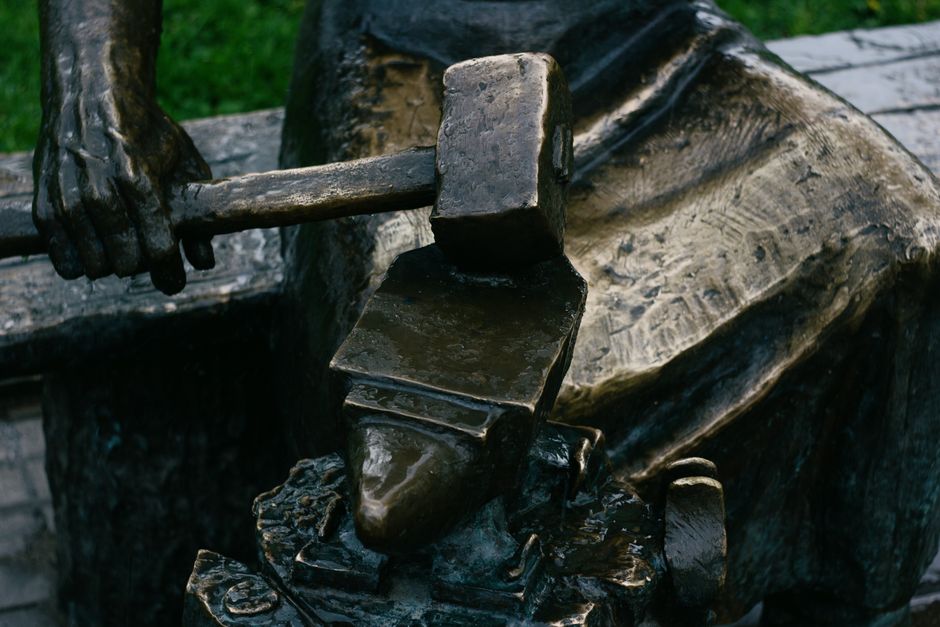
A few habits stretch your iron and your enchantments much further. The order you combine items changes the total cost, so it pays to think before you click.
Apply cheaper enchantments first and save costly ones for last to avoid hitting the "Too Expensive" wall early. Combining two enchanted books before applying them to a tool is often cheaper than adding each book to the tool one at a time. Repairing with a matching material keeps an item’s enchantments while restoring durability, which is why an anvil beats crafting a fresh, unenchanted tool.
Place your anvil in your main base near an enchanting table and a grindstone. That corner becomes your gear workshop, where you enchant, combine, and repair in one spot.
Keep a stack of the raw material for your favorite tools nearby as well. Repairing a diamond pickaxe with diamonds, or netherite gear with netherite ingots, restores durability without touching the enchantments you worked hard to add. Compared to enchanting a brand-new tool and hoping for good results, topping up an existing one on the anvil is cheaper and keeps your best gear in rotation far longer.
Frequently Asked Questions
How much iron does an anvil cost? An anvil needs three iron blocks and four ingots, which is thirty-one iron ingots in total. Gather a little extra to be safe.
Why does my anvil say "Too Expensive"? Every enchant, repair, or rename adds a hidden work penalty. Once the cost passes a cap, the anvil refuses further changes to that item on Survival difficulty.
Does the anvil wear out? Yes. Each use has a chance to damage it, and after enough uses it chips through three stages and finally breaks, so keep spare iron ready.
Can I repair a tool without losing enchantments? Yes. Use the anvil with a matching material or a second copy of the item, and the enchantments carry over onto the repaired tool.
What is the difference between an anvil and a grindstone? An anvil repairs while keeping enchantments and combines them, while a grindstone repairs but strips enchantments off and returns some experience.